Tiger Legend: A Font That Commands Attention and Conveys Power
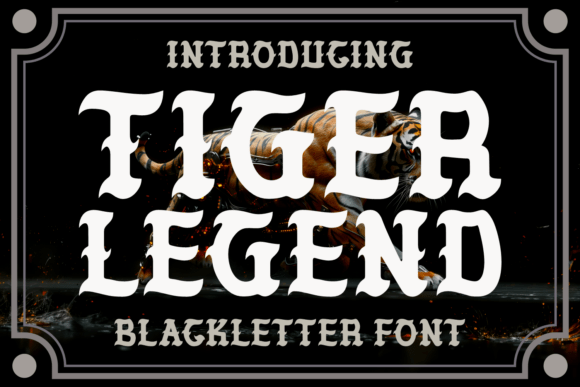
Fonts are more than just tools for readability—they are strategic assets in visual communication. Among the many fonts available, Tiger Legend stands out as a bold choice for those seeking to infuse their designs with intensity, energy, and a primal edge. This blackletter font merges the traditional Gothic aesthetic with dynamic curves that evoke the strength and agility of a tiger. For entrepreneurs, marketers, designers, and creatives looking to make an impact, Tiger Legend is not just a typeface; it's a design statement.
Strategic Use of Tiger Legend in Branding and Communication
When selecting a font, the goal is always to align it with your brand’s identity or message. Tiger Legend is particularly effective for projects that require a sense of power, movement, and authority. Its strong, curved strokes resemble tiger claws, which immediately signal strength and ferocity. This makes it ideal for industries such as sports, martial arts, wildlife conservation, or event marketing where you want to communicate dominance and vitality.
Consider how this font could work in your branding strategy. If you're launching a new fitness apparel line or promoting a high-energy event, using Tiger Legend can help position your brand as fierce and unstoppable. The visual weight of the font ensures it commands attention, whether printed on merchandise or displayed on digital banners.
Aligning Font Choice with Audience Perception
The right font can influence how your audience perceives your message. Tiger Legend doesn’t just look aggressive—it feels like it. This emotional resonance can be harnessed strategically to build a stronger connection with your target market. For instance, a martial arts school might use Tiger Legend in its logo to convey discipline, strength, and tradition all at once. Similarly, a wildlife organization focused on tiger conservation could leverage the font to symbolize the majesty and urgency surrounding these big cats.
- Sports Teams: Tiger Legend adds an intimidating edge to team logos and promotional materials, especially when paired with bold reds or oranges.
- Martial Arts Brands: Its Gothic roots combined with modern energy make it a perfect match for dojos and gyms aiming to project discipline and power.
- Event Posters: Whether it's a concert, tournament, or exhibition, this font can amplify the excitement and draw people in visually.
Planning Your Design with Purpose: When to Use Tiger Legend
Integrating Tiger Legend into your design requires intentionality. It’s not a one-size-fits-all solution, but rather a tool best used in specific contexts where its characteristics enhance the overall message. Before applying it broadly, consider the following:
- Understand the Message: Ask yourself what emotion or idea you want to emphasize. Is it power? Ferocity? Tradition with a twist?
- Know Your Audience: Will they perceive the font as edgy and inspiring, or overwhelming and unprofessional? Test it in different formats if possible.
- Set Visual Priorities: Decide whether this font will serve as the headline, accent, or background texture. Overuse may dilute its effect.
A practical example would be a boxing gym’s website header. Using Tiger Legend for the gym’s name can create an immediate impression of toughness and competitive spirit. However, body text should remain legible—stick to sans-serif or clean serif fonts to maintain readability while allowing the title to stand out.
Use Cases Where Tiger Legend Shines
Let’s explore some realistic scenarios where Tiger Legend can elevate your design and messaging:
- Brand Launches: Create a striking first impression with a logo or tagline that uses Tiger Legend. It signals confidence and ambition.
- Marketing Campaigns: For campaigns targeting youth or adventure seekers, this font can add a layer of excitement and raw energy.
- Product Packaging: Use it sparingly on labels or promotional inserts to highlight key features or slogans without overwhelming the design.
- Digital Banners: In online advertising, the font’s intensity helps capture attention quickly, increasing engagement rates.
Each of these applications benefits from the font’s ability to blend heritage with modernity. It’s a versatile option when you need to balance boldness with clarity.
Balancing Creativity and Practicality: Design Tips for Tiger Legend
Creativity thrives when constraints are clear. With Tiger Legend, the constraint is its bold character. Here’s how to maximize its potential while maintaining functional design:
First, pair it with complementary fonts. While it’s powerful on its own, using it alongside a minimalist sans-serif or a clean script can create contrast and visual harmony. For example, a wildlife documentary poster might feature Tiger Legend for the title and a soft cursive for the subtitle, blending aggression with elegance.
Second, think about color and spacing. Because the font is so intense, avoid using it in small sizes or low-contrast settings. Give it room to breathe and let it dominate the composition where it matters most. Dark backgrounds with white or gold text often work well, echoing the dramatic feel of the font.
Third, test it across mediums. Print and digital formats react differently to bold typefaces. Ensure that Tiger Legend remains legible and impactful whether viewed on a smartphone screen or a large billboard.
Long-Term Value and Brand Consistency
Font choices play a critical role in long-term brand consistency. Tiger Legend isn’t just a flash-in-the-pan style—it can become part of a consistent visual language that reinforces your brand’s values over time. If your business regularly engages with themes of strength, agility, or transformation, this font can become a signature element in your design toolkit.
For educators or publishers creating content around leadership or personal development, Tiger Legend can be used to highlight key concepts or chapter titles. It adds gravitas without being distracting, helping readers associate certain ideas with power and momentum.
Risks of Using Tiger Legend Without Strategy
While Tiger Legend offers significant advantages, it also carries risks if applied carelessly. One common pitfall is using it in environments where subtlety is required. In corporate communications or formal reports, the font may come off as overly aggressive or unprofessional. Always evaluate the tone and purpose before committing to a bold typeface.
Another risk is overuse. The font’s intensity can overwhelm viewers if it’s too prevalent in a design. Limit its application to headers, call-to-action buttons, or short impactful phrases. Let it serve as the exclamation mark in your visual narrative, not the entire sentence.
Finally, consider cultural context. In some regions, Gothic-style fonts may carry historical or religious connotations. Make sure your use of Tiger Legend aligns with the expectations and sensitivities of your audience.
How to Avoid Common Mistakes
- Conduct A/B Testing: Try different fonts in similar roles to see which resonates best with your audience.
- Review Brand Guidelines: Ensure that any font you choose fits within the broader identity framework of your brand.
- Seek Feedback: Get opinions from stakeholders or focus groups to gauge how the font affects perception and engagement.
Decision-Making Guidance for Thoughtful Application
Using Tiger Legend effectively starts with understanding your goals. Are you trying to inspire action, convey professionalism, or spark curiosity? Once you’ve clarified your objectives, ask:
- Does this font support the tone I’m trying to establish?
- Will it resonate with my target demographic?
- Can it be integrated without clashing with other design elements?
These questions help ensure that your font choice is intentional and aligned with your outcomes. For instance, a local sports team might choose Tiger Legend for its logo to embody competitiveness and community pride. But they’d also need to consider how it works with secondary colors, imagery, and even locker-room signage to maintain cohesion.
Real-World Examples of Intentional Design
One notable case is a martial arts academy that rebranded using Tiger Legend for its name and training mottos. The change led to increased recognition and a more defined brand personality, especially among younger demographics who responded to the bold, energetic vibe.
Similarly, a wildlife charity incorporated the font into a limited-edition campaign focused on tiger conservation. The design was minimalistic otherwise, allowing the font to act as a symbolic centerpiece. The result was a surge in social media shares and donor inquiries, demonstrating the font’s ability to drive engagement when used with purpose.
Conclusion: Choosing Tiger Legend with Clarity and Confidence
In the world of design, every detail counts. Tiger Legend is a font that demands attention, but it must be deployed with care. By aligning it with your brand’s goals, considering your audience’s preferences, and planning your layout thoughtfully, you can unlock its full potential. It’s not just about aesthetics—it’s about making decisions that support your message and outcomes.
Whether you’re positioning a new product, crafting a compelling event poster, or building a strong brand identity, Tiger Legend can be a valuable asset when used intentionally. Let it roar where it needs to, but don’t let it drown out the rest of your message. With the right approach, it can become a defining element of your creative strategy.